
316 Stainless Steel Guide: Corrosion Resistance, CF8M Casting & Marine Uses
If your parts will see seawater, de-icing salts or chloride chemicals, the difference between 304 and 316 stainless steel is not a matter of preference — it is the difference between a part that lasts and one that pits in eighteen months. This 2026 guide explains what makes 316 corrosion-resistant, how it is specified in castings (CF8M), and where its extra cost genuinely pays off.
What Makes 316 Stainless Steel Different?
316 is an austenitic chromium-nickel stainless steel with one decisive addition: 2–3% molybdenum. Molybdenum delays the initiation and slows the spread of pitting and crevice corrosion where chlorides concentrate — seawater, brine, salt spray and chloride-bearing chemicals. Typical 316 chemistry is roughly 16–18% chromium, 10–14% nickel and 2–3% molybdenum.
Mechanically, 316 and 304 are almost identical: both yield around 205–210 MPa and tolerate about 485 MPa tensile in the annealed condition. Nobody should choose 316 because it is 'stronger' — the decision is about corrosion, environment and total lifecycle cost.
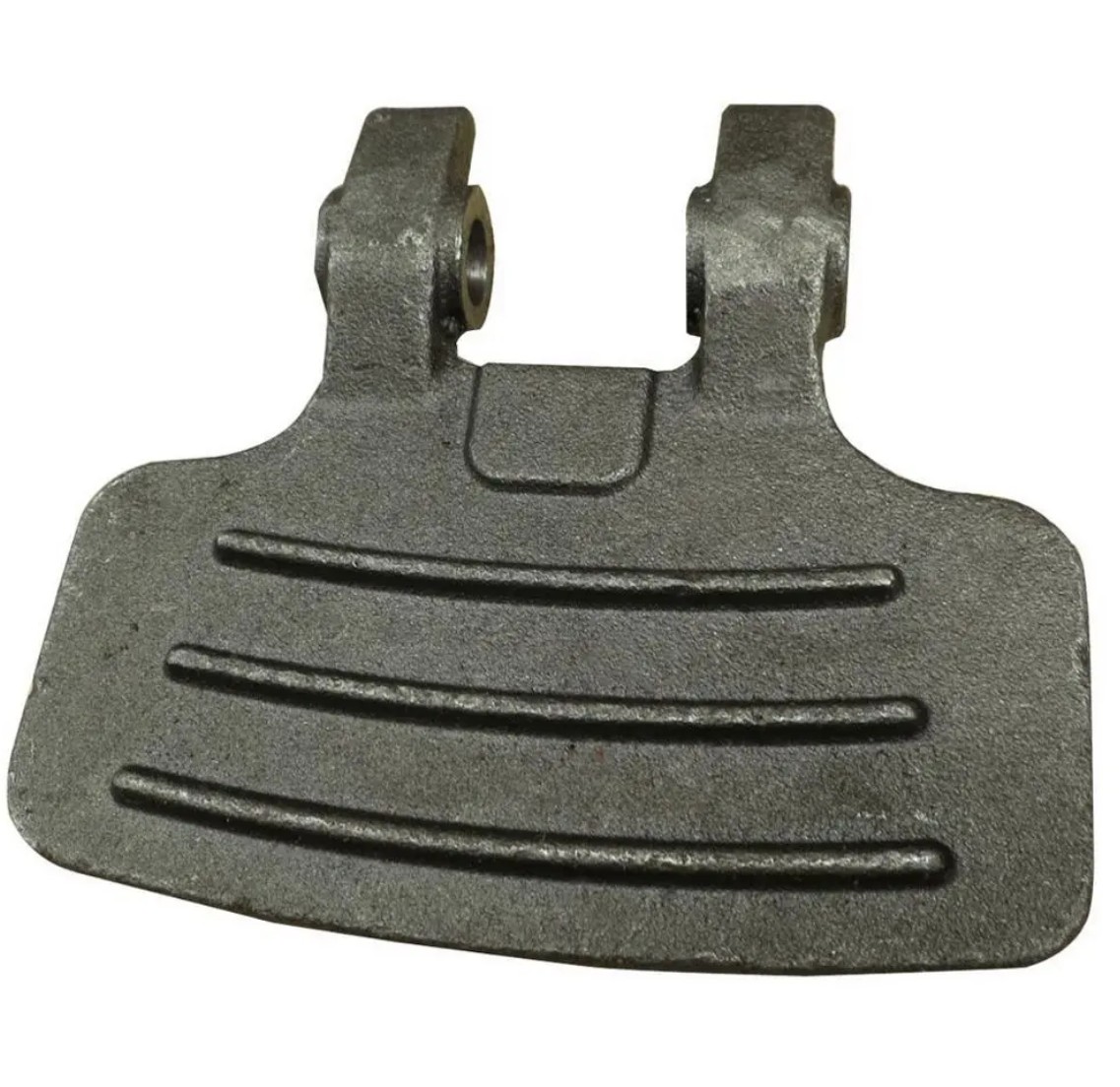
316 vs 304: Where the Difference Matters
| Service condition | 304 | 316 |
|---|---|---|
| Dry indoor / general atmosphere | Good — economical | Over-specified |
| Seawater splash / immersion | Pits in 6–18 months | Minimum viable grade |
| Coastal air (ISO 9223 C4/C5) | Not rated | Suitable |
| Chloride / CIP cleaning chemicals | Attacked within months | Preferred |
| Concentrated nitric acid | Better (higher Cr) | Worse |
316 is not corrosion-proof: warm seawater, concentrated brines and hydrochloric acid can still attack it, and severe service may call for duplex stainless or nickel alloys. Surface finish matters too — a proper pickling and passivation step restores full pitting resistance on castings.
316 in Castings: CF8M and 316L
316 is a wrought grade name; casting drawings usually call out its cast equivalent CF8M (EN 1.4408). Related grades: 304 → CF8, 304L → CF3, 316L → CF3M. Under ASTM A351, CF8M carries 18–21% Cr, 9–12% Ni and 2–3% Mo.
For parts that will be welded after casting and cannot be post-weld heat-treated, specify the low-carbon 316L / CF3M to avoid sensitization. When welding 316 castings, use 316L filler to prevent molybdenum segregation in the weld pool.
Our 316 Stainless Capabilities
HUABO produces 316 corrosion-resistant parts by precision investment casting, fine forging and CNC precision machining. Castings are dense and defect-free, forgings hold dimensional stability, and machined parts retain tight tolerances through long service. See our stainless steel investment castings, CNC stainless threaded fittings and pump & valve bodies.
Applications in Demanding Environments
- Marine & port — ship fittings, deck hardware and saltwater connectors
- Chemical & metallurgy — corrosion-resistant piping, valve and pump components
- New energy & storage — protective parts for outdoor energy equipment
- Outdoor machinery & precision hardware — exposed fittings needing long-term dimensional stability
Looking ahead, ultra-pure, fine-grained 316 variants are improving low-temperature toughness and fatigue life for offshore engineering and high-end new-energy equipment.
Frequently Asked Questions
What is the main difference between 304 and 316 stainless steel?
316 contains 2–3% molybdenum, which greatly improves resistance to chloride pitting and crevice corrosion. In saltwater, coastal or chemical environments 316 is the appropriate choice; in dry indoor or chloride-free service, 304 is usually enough and more economical.
What is the casting grade equivalent of 316 stainless?
316 is the wrought designation; its common cast equivalent is CF8M (EN 1.4408) under ASTM A351. The low-carbon welding-friendly variant is CF3M (316L). Always specify the exact cast grade and standard on the drawing.
Is 316 stainless steel suitable for seawater?
Yes — 316 is the minimum viable grade for seawater splash and immersion service, though crevice design, surface finish and passivation still matter. For warm, stagnant or highly concentrated chloride service, duplex or nickel alloys may be required.
Can HUABO supply custom 316 stainless steel parts?
Yes. We manufacture 316/CF8M parts by investment casting, forging and CNC machining to customer drawings, with material certificates, passivation and inspection. Send your drawing for a factory-direct quote.
Looking for a reliable custom machinery parts factory in China? Contact HUABO Machinery with your drawings and material requirements — as a source factory in Ningbo, we deliver factory-direct pricing, engineering support and OEM/ODM manufacturing.